Back to all articles
All, Health Tips
April 11, 2019
0 comments
What is a Stroke?
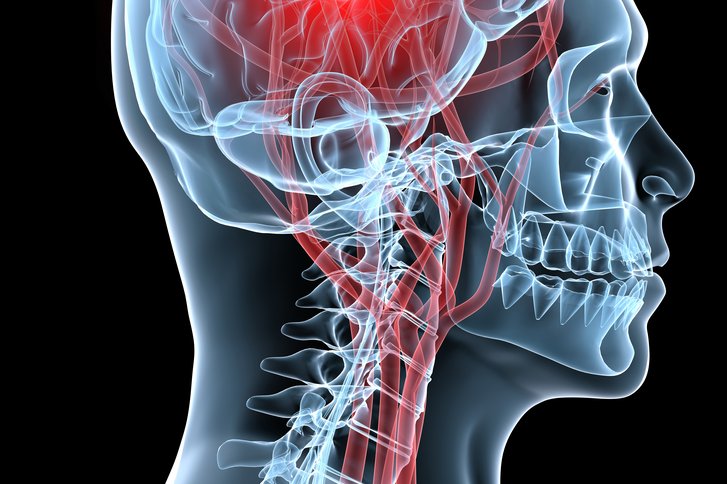 A stroke is a sudden interruption in the blood supply of the brain. Most strokes are caused by an abrupt blockage of arteries leading to the brain (ischemic stroke). Other strokes are caused by bleeding into brain tissue when a blood vessel bursts (hemorrhagic stroke). Because stroke occurs rapidly and requires immediate treatment, stroke is also called a brain attack. When the symptoms of a stroke last only a short time (less than an hour), this is called a transient ischemic attack (TIA) or mini-stroke.
The effects of a stroke depend on which part of the brain is injured, and how severely it is injured. Strokes may cause sudden weakness, loss of sensation, or difficulty with speaking, seeing, or walking. Since different parts of the brain control different areas and functions, it is usually the area immediately surrounding the stroke that is affected. Sometimes people with stroke have a headache, but stroke can also be completely painless. It is very important to recognize the warning signs of stroke and to get immediate medical attention if they occur.
Types of Stroke
Ischemic Stroke
The most common type of stroke, accounting for almost 80 percent of all strokes, is caused by a clot or other blockage within an artery leading to the brain.
Intracerbral Stroke
An intracerebral hemorrhage is a type of stroke caused by the sudden rupture of an artery within the brain. Blood is then released into the brain compressing brain structures.
Subarachnoid Hemorrhage
subarachnod hemorrhage is also a type of stroke caused by the sudden rupture of an artery. A subarachnoid hemorrhage differs from an intracerebral hemorrhage in that the loation of the rupture leads to blood filling the space surrounding the brain rather than inside of it.
How a Stroke is Diagnosed
If you have had a stroke, or have had stroke warning signs or risk factors, it is very important to seek prompt medical attention. Your doctor will work with you to find the cause of your problem and determine the best treatment. Even if your symptoms resolve without treatment, you should still discuss them with your doctor. Don’t assume that a problem is unimportant if it goes away on its own. Never try to make a diagnosis by yourself.
IMPORTANT: If you or someone you know is having a stroke now, call 911! Stroke is a medical emergency.
The first step in understanding your problem is to obtain a careful medical history. Your doctor or health care provider will ask questions about your situation. If you can’t communicate, a family member or friend will be asked to provide this information. Your doctor will ask about the symptoms you are having now and have had in the past, previous medical problems or operations, and any illnesses which run in your family. Be sure to bring a current list of all the medicines you take (prescription and non-prescription.) If your symptoms lasted only a while, your doctor might also want to talk with someone else who was with you at the time.
The next step is a thorough physical examination. Your doctor will check your pulse and blood pressure, and examine the rest of your body (heart, lungs, etc). The neurologic examination includes detailed tests of your muscles and nerves. The doctor will check your strength, sensation, coordination and reflexes. In addition, you will be asked questions to check your memory, speech and thinking.
Depending on the results of your evaluation, your doctor may need additional tests to fully understand your problem. You may also be referred to a medical specialist in brain disorders (neurologist), brain surgery (neurosurgery) or another area. Be patient. Sometimes it takes a while to discover the cause of stroke symptoms, and sometimes the cause of a stroke cannot be determined. Be sure to discuss any questions or concerns with your doctor or health care provider.
Lab Tests and Procedures
If you have had a stroke or stroke warning signs, your doctor may need additional information to fully understand your problem or plan the best treatment. In addition to blood tests, you may need to schedule special tests or procedures to examine your brain, heart or blood vessels.
Here are the tests doctors use most often in stroke diagnosis. Click on the test name for more information.
Tests that View the Brain, Skull, or Spinal Cord
- CT SCAN
A CT scan uses X-rays to produce a 3-dimensional image of your head. A CT scan can be used to diagnose ischemic stroke, hemorrhagic stroke, and other problems of the brain and brain stem.
- MRI SCAN
- (Magnetic resonance imaging, MR)
An MRI uses magnetic fields to produce a 3-dimensional image of your head. The MR scan shows the brain and spinal cord in more detail than CT. MR can be used to diagnose ischemic stroke, hemorrhagic stroke, and other problems involving the brain, brain stem, and spinal cord.
Tests that View the Blood Vessels that Supply the Brain
- Carotoid Doppler
(Carotid duplex, Carotid ultrasound)
Painless ultrasound waves are used to take a picture of the carotid arteries in your neck, and to show the blood flowing to your brain. This test can show if your carotid artery is narrowed by arteriosclerosis (cholesterol deposition).
- Transcranial doppler
(TCD)
Ultrasound waves are used to measure blood flow in some of the arteries in your brain.
- MRA
(Magnetic resonance angiogram)
This is a special type of MRI scan (see above) which can be used to see the blood vessels in your neck or brain.
- Cerebral Arteriogram
(Cerebral angiogram, Digital subtraction angiography, [DSA])
A catheter is inserted in an artery in your arm or leg, and a special dye is injected into the blood vessels leading to your brain. X-ray images show any abnormalities of the blood vessels, including narrowing, blockage, or malformations (such as aneurysms or arterio-venous malformations). Cerebral arteriogram is a more difficult test than carotid doppler or MRA, but the results are the most accurate.
Tests that View the Heart or Check its Function
- Echocardiogram
(2-d echo, Cardiac echo, TTE, TEE)
Painless ultrasound waves are used to take a picture of your heart and the circulating blood. The ultrasound probe may be placed on your chest (trans-thoracic echocardiogram, TTE) or deep in your throat (trans-esophageal echocardiogram, TEE).
- Electrocardogam
(EKG, ECG)
This is a standard test to show the pattern of electrical activity in your heart. 3-10 electrical leads are attached to your chest, arms and legs. Sometimes the EKG is recorded continuously over days, with the signals sent to a portable recorder (Holter monitor) or by radio to a hospital monitoring station (telemetry).
Routine Screening Tests
- Chest x-ray
(CXR)
An x-ray of the heart and lungs is a standard test for patients with acute medical problems. Abnormalities may alert your doctor to important problems such as pneumonia or heart failure.
- Urinalysis
(UA)
A urine sample is often obtained to screen for bladder infection or kidney problems. If infection is suggested, a urine culture test may be required.
- Pulse oximetry
(Blood oxygen)
This painless test is sometimes done in the emergency room or hospital to determine if your blood is receiving enough oxygen from the lungs. A small probe with a red light is usually attached to one finger.
Other Neurologic Tests
- Electroencephalogram
(EEG)
The EEG measures your brain waves through several electrical leads painlessly attached to your head. EEG is not routinely used for stroke diagnosis, but would be ordered if your doctor thinks that you may have had a seizure.
- Lumbar puncture
(LP, spinal tap)
A needle is inserted in your lower back to obtain a sample of the fluid (cerebrospinal fluid, CSF) which surrounds your brain and spinal cord. LP is not routinely used for diagnosis of ischemic stroke. However, LP is often required if subarachnoid hemorrhage (bleeding from a cerebral aneurysm) is suspected. LP may also be needed if your doctor suspects a nervous system infection (such as meningitis) or inflammation.
- Electromyogram / Nerve conduction test
(EMG / NCV)
This test records the electrical activity of the nerves and muscles. EMG is not used for stroke diagnosis, but might be needed if your doctor suspects a problem with the nerves in your arms or legs.
- Brain biopsy
This is a surgical procedure in which a small piece of the brain is removed for microscopic examination. Biopsy is used to diagnose lesions (such as tumors) which cannot be identified by CT or MRI scan. It is very rarely used for stroke diagnosis, often only when cerebral vasculitis is suspected.
Blood Tests
If you are being evaluated for stroke, it is likely that your doctor will order some blood tests. Stroke cannot be diagnosed by a blood test alone. However, these tests can provide information about stroke risk factors and other medical problems which may be important.
Please note that the first set of tests are commonly used for routine or emergency evaluation of stroke, while the others are used only in very specific situations. Unless otherwise noted, each of these tests require just one tube of blood (a few teaspoons) drawn from a vein.
Commonly Used Blood Tests
- CBC (Complete blood count)
This is a routine test to determine the number of red blood cells, white blood cells, and platelets in your blood. Hematocrit and hemoglobin are measures of the number of red blood cells. A complete blood count might be used to diagnose anemia (too little blood) or infection (shown by too many white blood cells).
- Coagulation tests
PT (Prothrombin time)
PTT (Partial thromboplastin time)
INR (International normalized ratio)
These tests measure how quickly your blood clots. An abnormality could result in excessive bleeding or excessive clotting (which is difficult to measure). If you have been prescribed a blood-thinning medicine such as warfarin (Coumadin or similar drugs), the INR is used to be sure that you receive the correct dose. It is very important that you obtain regular checks. If you are taking heparin, the PTT (or aPTT) test is used to determine the correct dose.
- Blood chemistry tests
These tests measure the levels of normal chemical substances in your blood. The most important test in emergency stroke evaluation is glucose (or blood sugar), because levels of blood glucose which are too high or too low can cause symptoms which may be mistaken for stroke. A fasting blood glucose is used to help in the diagnosis of diabetes, which is a risk factor for stroke. Other blood chemistry tests measure serum electrolytes, the normal ions in your blood (sodium, potassium, calcium) or check the function of your liver or kidneys.
- Blood lipid tests
Cholesterol, total lipids, HDL, and LDL
Elevated cholesterol (particularly “bad” cholesterol, or LDL) is a risk factor for heart disease and stroke. More information about cholesterol and cardiovascular is available from the National Institutes of Health.
Blood Tests for Specific Situations
This is a partial list of less common blood tests sometimes ordered for specific stroke situations, or where the cause of stroke is unclear (for example, in a young person without known stroke risk factors). Abnormal results may suggest a cause for the stroke.
- Antinuclear antibodies (ANA)
- Antiphospholipid antibodies (APL), Anticardiolipin antibodies (ACL), Lupus anticoagulant (LA)
- Blood culture
- Cardiac enzymes: Troponin, Creatine kinase (CPK, CK), LDH isoenzymes
- Coagulation factors: Antithrombin III, Protein C, Protein S; Factor VIII; activated Protein C resistance (Factor V Leiden)
- Erythrocyte sedimentation rate (ESR)
- Hemoglobin electrophoresis
- Homocysteine
- Syphilis serology (VDRL, FTA, others)
- Toxicology screen (serum or urine)
Please note that this chart applies only to the use of these tests for stroke diagnosis. Be sure to discuss any questions or concerns with your doctor or health care provider.
CT Scan
The CAT scan (also called CT scan) is well-known by name, but do you really know what it is and understand how it works? A CT scan is usually one of the first tests done in a stroke evaluation, particularly during an acute stroke in the emergency room. This test can show areas of abnormalities in the brain, and can help to determine if these areas are caused by insufficient blood flow (ischemic stroke), a ruptured blood vessel (hemorrhage), or a different kind of a problem. CT scans can be obtained on any part of the body, but the information here applies only to CT scans of the head.
What is a CT scan?
A CT scan uses X-rays to take pictures of your skull and brain. The patient lies in a tunnel-like machine while the inside of the machine rotates and takes X-rays of the head from different angles. These pictures are later used by computers to make an image of a “slice” (or cross-section) of the brain.
Why do doctors use CT scans?
CT scans use computers and rotating X-ray machines to create images of slices, or cross-sections, of the brain. Unlike other techniques, CT scans (and MRI scans) can show the inside of the head, including soft tissue, bones, brains and blood vessels. CT scans can often show the size and locations of brain abnormalities caused by tumors, blood vessel defects, blood clots, and other problems. CT scans are a primary method of determining whether a stroke is ischemic or hemorrhagic.
Does a CT scan always diagnose a stroke?
No. Even if you are having a stroke, it might not be seen on a CT scan for several reasons. In many cases, the involved area of the brain does not appear abnormal for the first several hours after the onset of stroke. Also, the stroke region may be too small to be seen on CT scan, or it may be in a part of the brain (brain stem or cerebellum) which the CT scan does not image well. Depending on the results of the CT scan, your doctor may wish to obtain additional testing, including an MRI scan. MRI can be more accurate for stroke and other conditions, but it takes longer and is often not available under emergency conditions.
What happens during a CT scan?
You will remove any metallic objects which could diminish the quality of the images (this includes jewelry, glasses, dentures, and hair clips). You may also be asked remove your clothing and put on a patient gown. A technologist will help you to lie face up on the scanner table, with your head toward the “doughnut hole” of the CT scanner. The technologist will position you on the table, and a device to hold your head in place may be used. Then he or she leaves the exam room and goes to the control room, where you can still communicate by intercom.
An intravenous dye (contrast dye) may be given, through injection. This can help to highlight any areas of abnormality in the scan.
While CT images are being taken, it is important to lie still on the table, which will be moving very slowly in order to image the brain. It is normal for the CT scanner to make a whirring noise during the exam, so you should not be alarmed. The table will be moving a few millimeters at a time in order to obtain images of small slices of the brain, until the exam is finished. The procedure usually takes between 20 minutes and an hour.
What are the risks of CT scans?
The test is painless and there are few side effects. The CAT scan uses very little x-ray radiation. If you receive contrast dye, there is a chance of an allergic reaction. This reaction can be serious, and may require treatment with appropriate medication. If you have allergies to any foods or medicines, particularly seafood or iodine, it is important to inform the technologist before the procedure. You should also tell the technologist if you could be pregnant.
How does a CT scan work?
CT is based on the same principles as regular X-ray. The X-rays are absorbed differently by the different parts of the body. Bone absorbs the most X-rays, so the skull appears white on the image. Water (in the cerebral ventricles or fluid-filled cavities in the middle of the brain) absorbs little, and appears black. The brain has intermediate density and appears grey. Most ischemic strokes are less dense (darker) than normal brain, whereas blood in hemorrhage is denser and looks white on CT.
In brain CT imaging, a fan beam of X-rays is sent out through the skull, and a device on the other side of the scanner picks up the different strengths of the X-rays. After the X-ray tube and detector have made one 360° rotation, the image of one cross-section (a few millimeters in width) has been taken. During this rotation, hundreds of snapshots are taken, which are later used by a computer to make the final image.
MRI
MRI is a test that produces very accurate pictures of the brain and its arteries without x-rays or dyes. This test is useful for detecting a wide variety of brain and blood vessel abnormalities, and can usually determine the area of the brain that is damaged by an ischemic stroke During this painless test, you lie on a table that moves into the opening of the MRI machine. The machine creates a magnetic field which briefly alters the water molecules in your brain cells. The response to this magnetic field is then detected and used to create an image of the brain. Although MRI scans can be used on any part of the body, the following description applies only to MRI of the head.
Angiograpy
Cerebral angiography is used to image the blood vessels of the brain and the blood flowing through them. Angiography involves entering a catheter into the body to inject a dye (a contrast medium) into the carotid arteries, the vessels of the neck that lead to the brain. Then regular x-ray is used to image the dye that is flowing through the blood vessels. Although cerebral angiography can be used to to investigate many abnormalities, only its relevance to stroke is discussed here
Ultrasound
- Carotid ultrasound is a test that shows the carotid arteries (vessels in the neck that provide blood flow to the brain), as well as how much blood flows and how fast it travels through them. Ultrasound waves — the same ones used in imaging the fetus in a pregnant woman — are used to make an image of the arteries. This image can be used to find out if there is an abnormality or blockage of the carotid arteries that could lead to stroke. This test can be used to investigate the carotid arteries for several reasons, but the information here applies only to stroke evaluation.
Echocardiogram
- An echocardiogram can be used to find out if there is an abnormality of the heart that could lead to stroke. There are two types of echocardiograms: one that examines the heart through the chest (called transthoracic echocardiogram, or TTE), and one that examines the heart through the throat (called transesophageal echocardiogram, or TEE). The information that follows applies only to the use of these procedures in a stroke evaluation.
Transthoracic echocardiogram is most commonly performed, and it is a test that gives information about the size of the heart chamber, the motion of the heart walls, the movements of the heart valves and changes in structure in and around the heart. Ultrasound waves (the same ones used in imaging the fetus in a pregnant woman) are used to make an image of the heart’s walls and valves.
Electrocardiogram
- ECG is done so often and routinely that most people do not even consider it a special test. However, a lot can be learned from an ECG about the regularity (or irregularity) of the heartbeat. The fact that irregularities in the rhythm of the heartbeat can lead to stroke makes it an important tool in stroke evaluation.
Reducing Your Risk
- If you have ever had a stroke or experience any of the warning signs of a stroke, it is very important that you work with your doctor to determine the most likely cause of the problem and the best course of treatment for you.
Certain medical conditions greatly increase your likelihood of having a stroke. Working with your doctor, you may need to begin specific medical treatment to control these risk factors.
Medical conditions that increase your stroke risk:
- Previous stroke or “mini-stroke” (transient ischemic attack, TIA).
Depending on the most likely cause of your stroke, your doctor may prescribe specific medication or consider surgery to remove fatty deposits in your carotid artery.
- High blood pressure.
Hypertension is one of the leading risks for heart disease and stroke. Your physician may advise dietary or lifestyle changes, or specific medications to lower your blood pressure.
- Diabetes.
High blood sugar can increase your risk.Heart disease.
If you have an irregular heartbeat (atrial fibrillation), disease of the heart valves, congestive heart failure or have had a recent heart attack, your physician may prescribe medications to thin your blood and/or reduce your cholesterol level.
Controllable risk factors and lifestyle choices:
- Smoking.
Tobacco use is a major preventable risk factor for stroke and heart disease. Even if you have smoked for years, you can still reduce your risk by quitting now.
- Obesity, elevated cholesterol, and elevated lipids.
Reducing your dietary intake of saturated fats and cholesterol may help reduce your risk of a stroke.
- Physical inactivity.
A sedentary lifestyle void of regular exercise can contribute to heart disease which may lead to stroke.
- Excessive alcohol intake.
- Illegal drug use.
Uncontrollable risk factors:
- Increasing age.
Stroke is more common in people over 60.
- Male sex.
Men and women both have strokes but stroke is more common at younger ages in men.
- Heredity and ethnicity.
Stroke is more common in people whose close relatives have had stroke at an early age. African-Americans and Hispanic Americans are at higher risk than white Americans. This may be due in part to high blood pressure and dietary differences.
Caregiver
Family caregivers and friends play a critical role in a loved one’s recovery from stroke, particularly as time spent in hospitals and rehabilitation facilities continues to decrease. Stroke recovery lasts for at least two years after stroke onset, so most of the support during this period comes from informal sources including friends and family members.
Providing care for a stroke patient can be an extremely rewarding experience. At the same time, it can be very stressful and frustrating to be suddenly thrust into the position of caregiver with little or no warning. It is crucial to remember to take care of your own needs in addition to those of the patient.
Also important to note is that stress tends to increase over time if the caregiver’s needs are not met. Some of those needs may include the need for information (especially better understanding of the emotional and behavioral changes of the patient), the need for skills in the physical aspects of care, and the need for support in the “case management” aspects of care. In terms of emotional reactions, caregivers often feel one or more of the following: anxiety, guilt, depression, frustration, resentment, impatience, and fear. (Fear that a stroke may happen again, fear that the stroke survivor may be unable to accept his or her disabilities, fear that the survivor may require nursing home placement, fear that the caregiver may make mistakes, and fear that families and friends will abandon them.) Coping with these reactions is paramount to a healthy caregiver, and ultimately, to a well-adjusted patient.